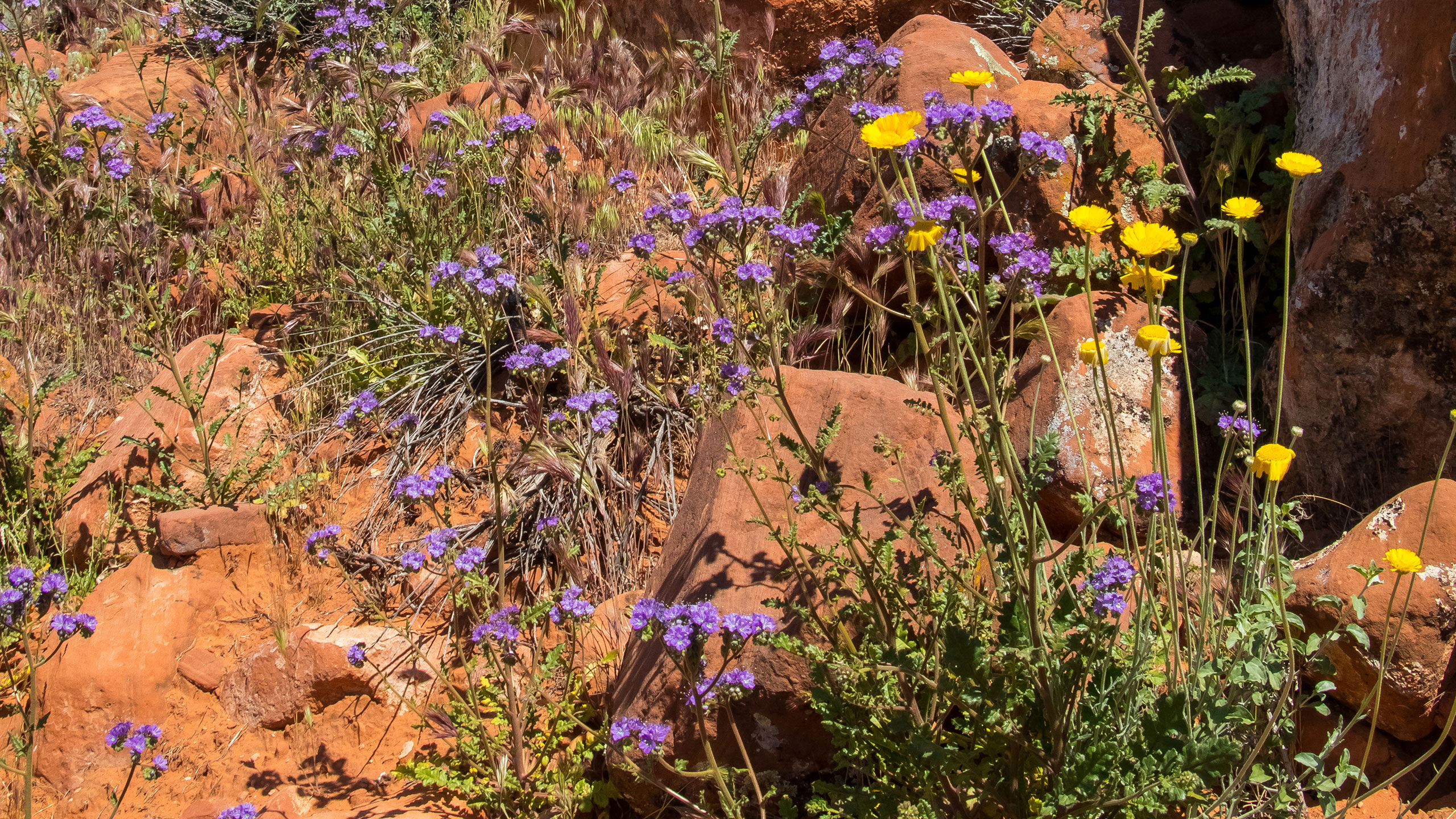
Plant life in the Reserve
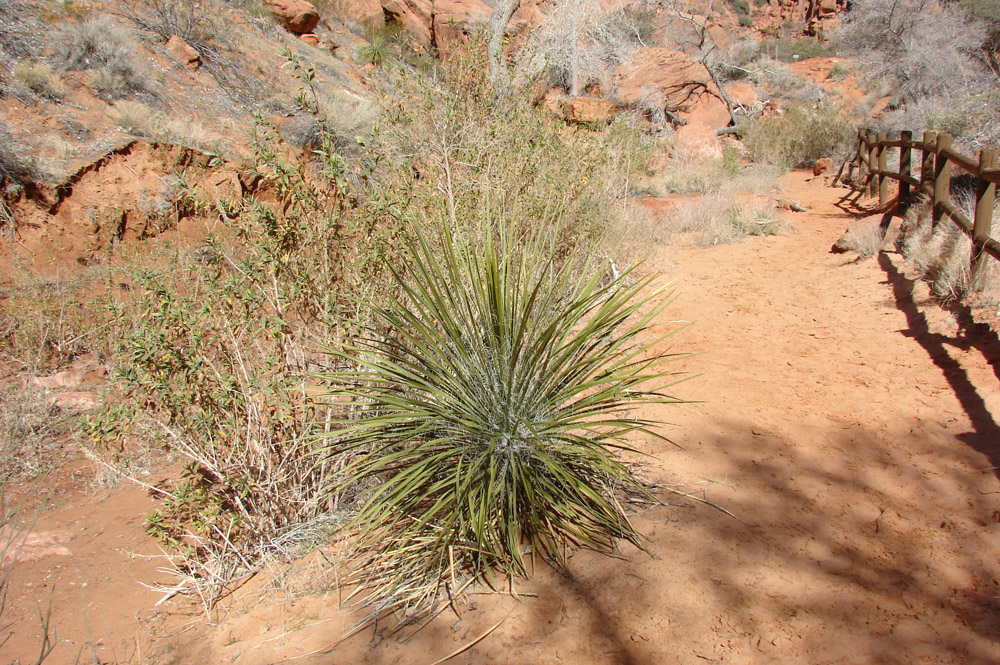
Plants in the Reserve are adapted to deal with shallow soil and scant water. Slow-growing desert scrub vegetation and fragile ephemeral species take advantage of winter and late summer rain. Sage, blackbrush, creosote, and scrub live oak, survive the hot, dry desert conditions using strategies such as light reflective coloration, small leaves, waxy leaf coverings, and the ability to drop their leaves and survive in a dormant state during extreme drought. Cacti store moisture in their fleshy pads. Annual grasses and plants quickly flourish after seasonal rains, flower, then leave their seeds to wait for the next rain.
Trees
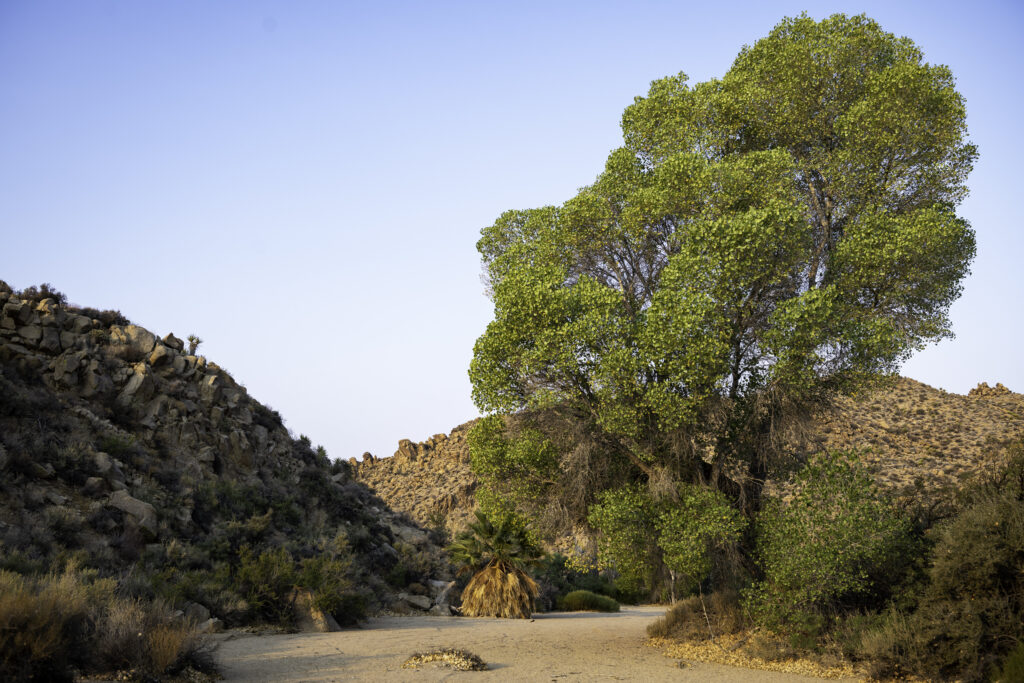
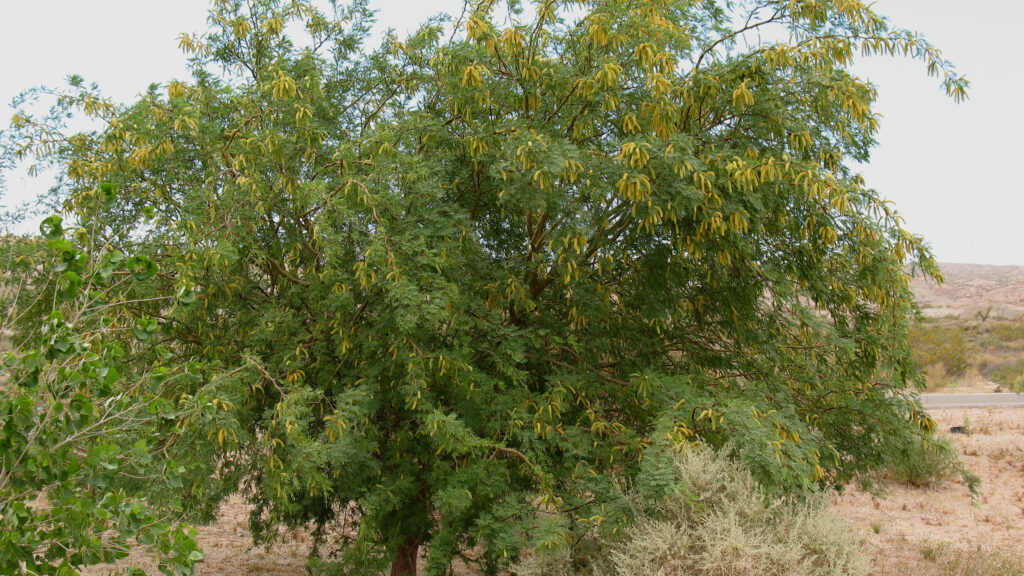


Utah Juniper Juniperus osteosperma
Shrubs
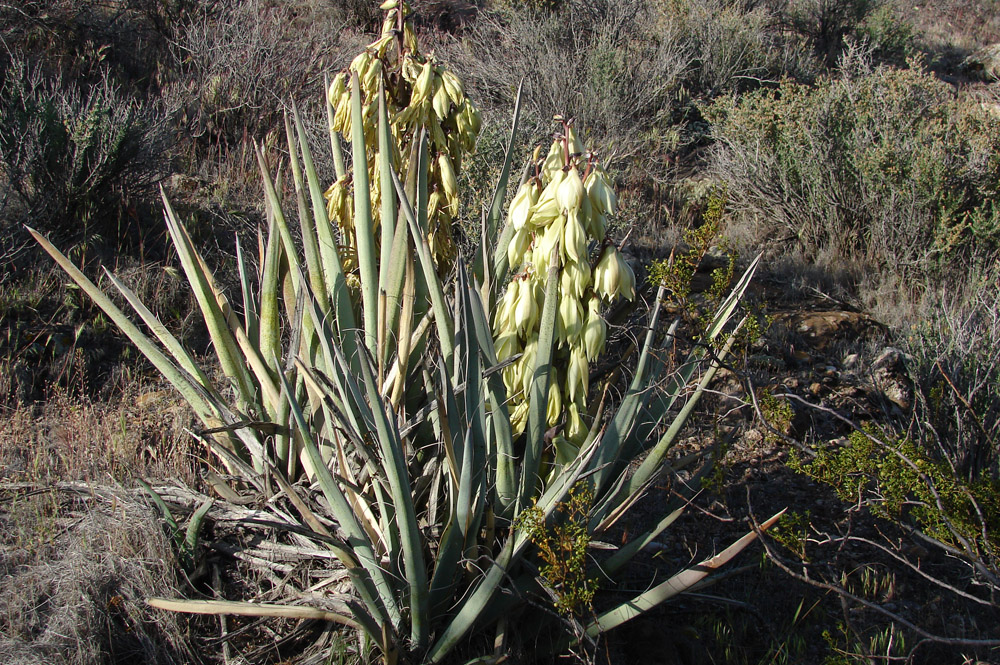

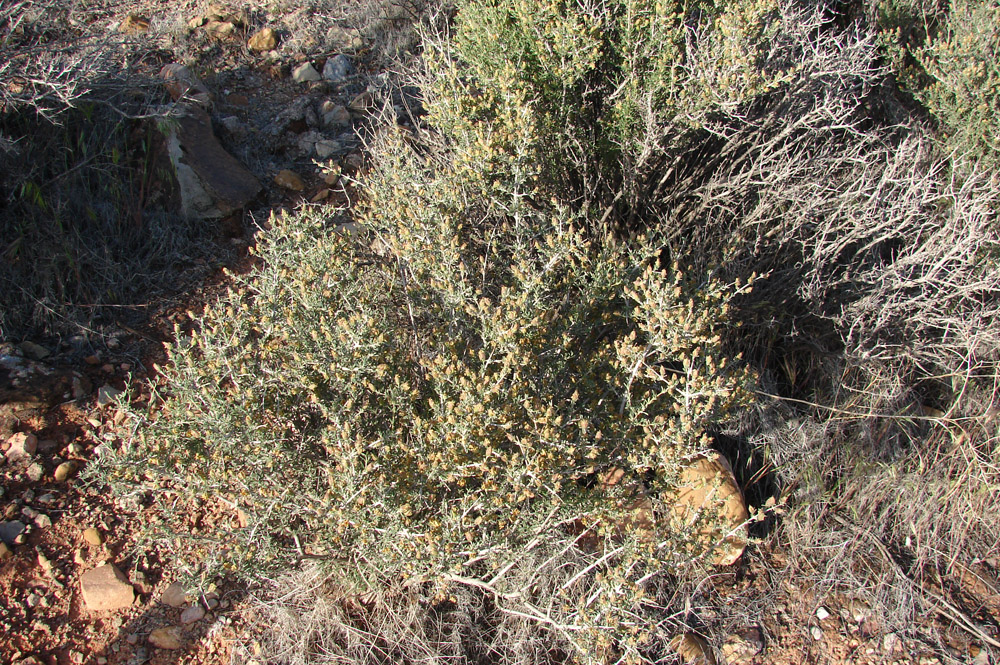

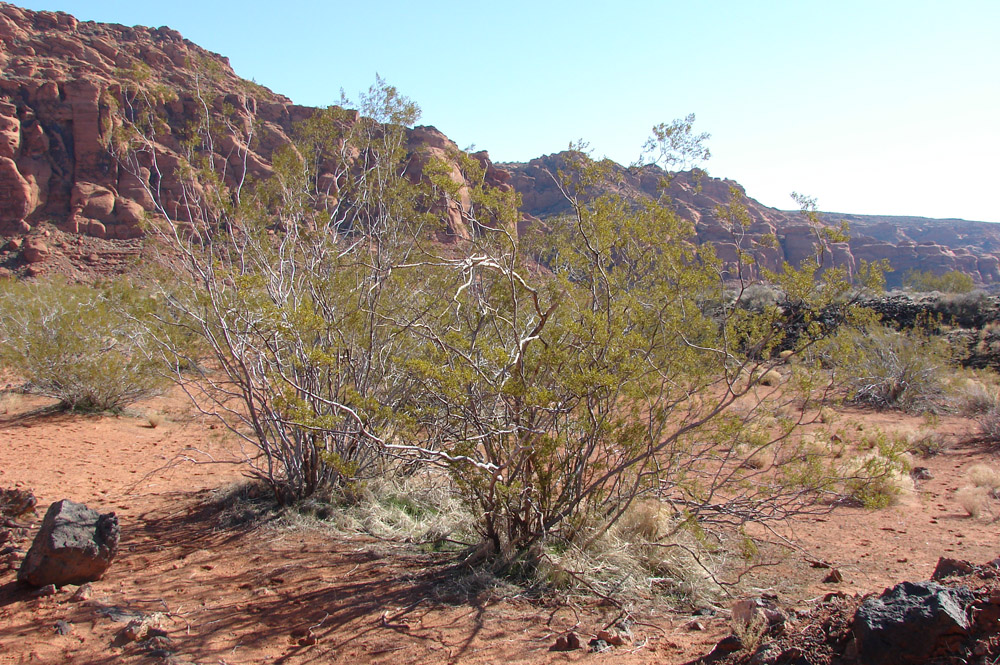

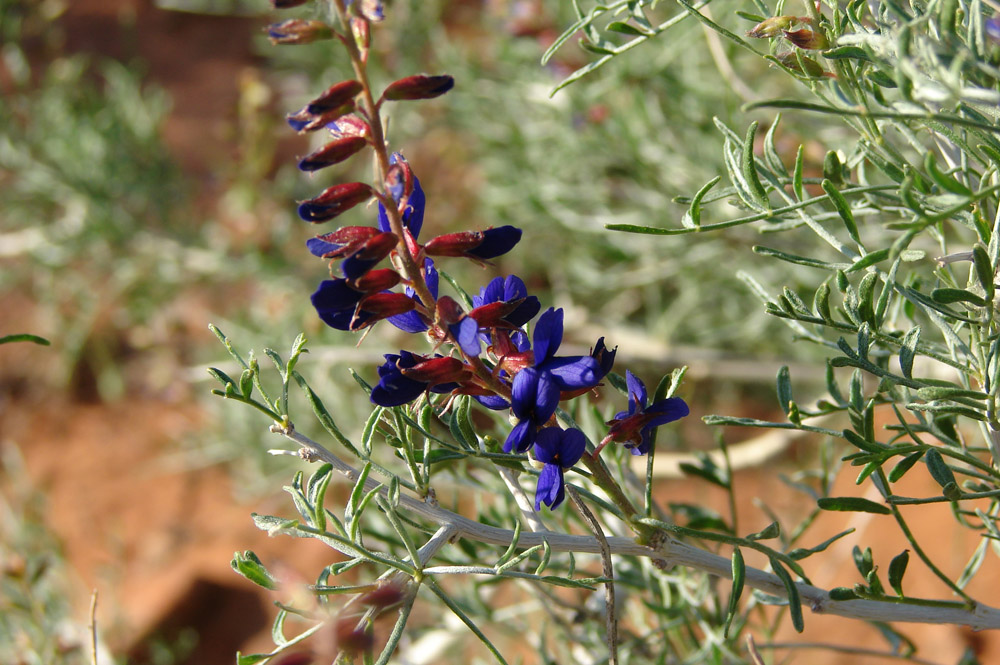
Indigo Bush
Psorothamnus fremontii

Mormon or Brigham Tea
Ephedra viridis

Old Man, Sand Sagebrush
Artemesia filifolia

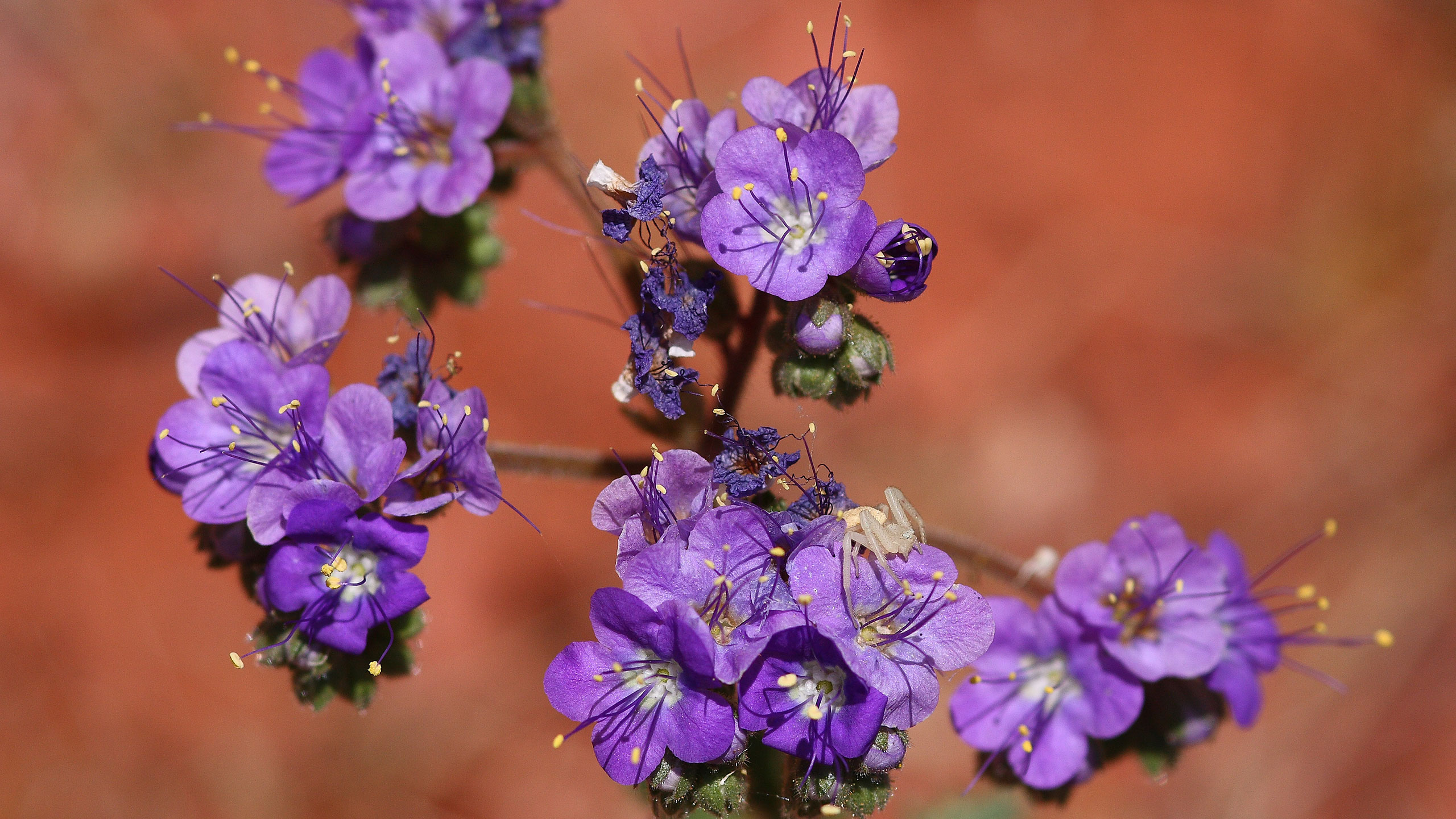
Wildflowers

Desert Trumpet Eriogonum inflatum

Desert Paintbrush Castilleja chromosa

Desert Globemallow Sphaeralcea ambigua

Desert Marigold Baileya multiadiata

Firecracker Penstemon Penstemon eatonii

Four O’Clock Mirabilis multiflora

Sego Lily Calochortus nuttallii

Spectaclepod Dithyrea wislizenii
Cacti
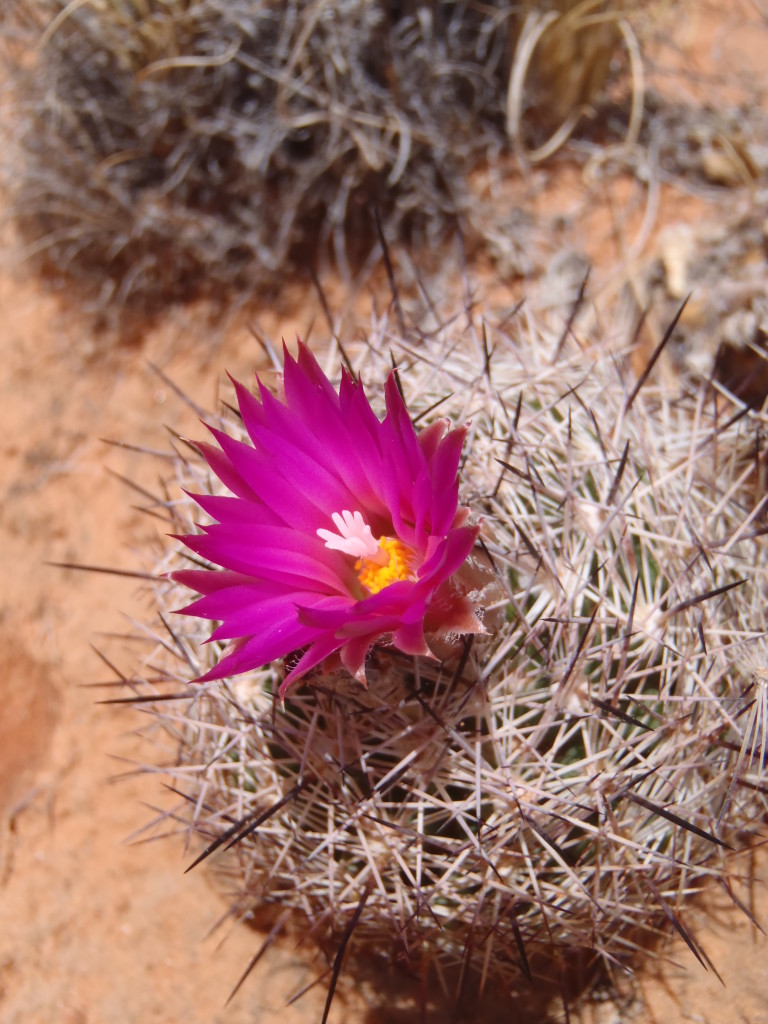
Coryphantha
Escobaria vivipara

Englemann Prickly Pear
Opuntia phaeacantha
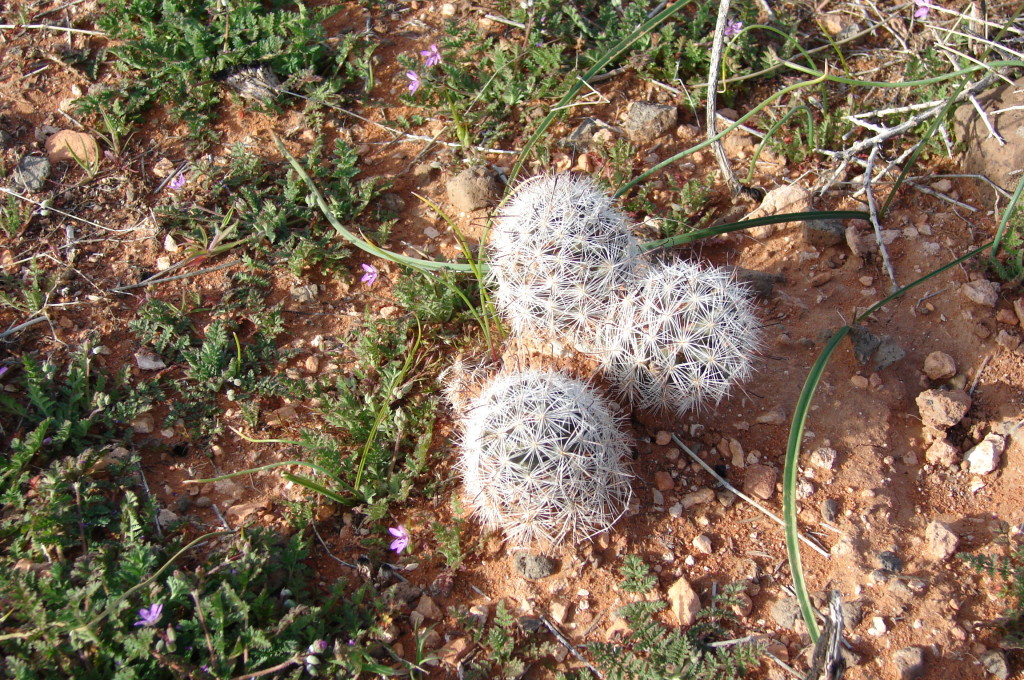
Common Fishhook Cactus
Cochemiea tetrancistra
Purple Torch
Echinocereus engelmannii

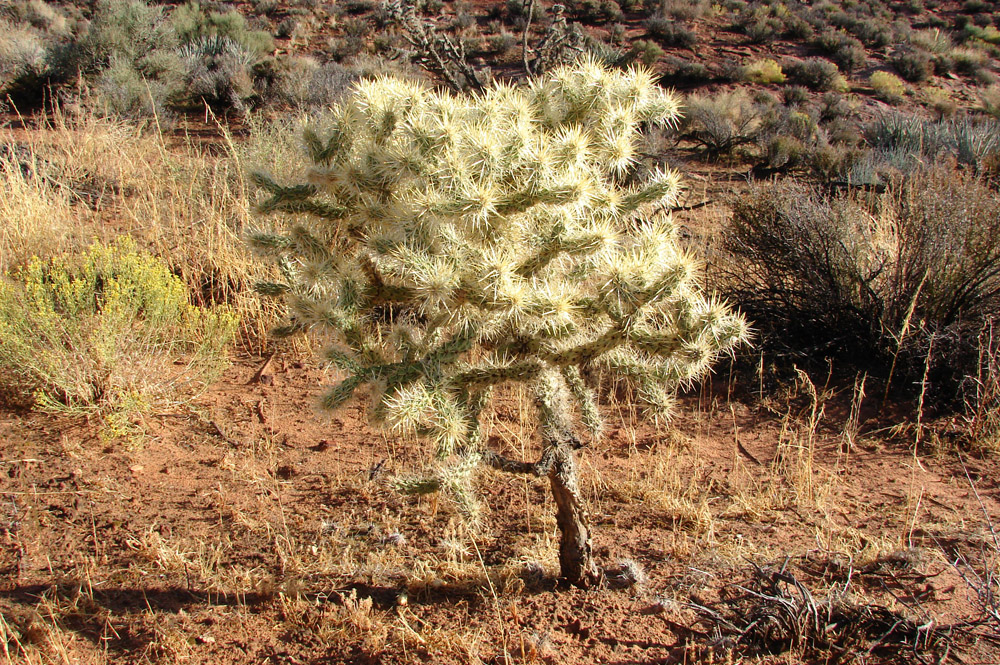
Silver Cholla
Opuntia echinocarpa